
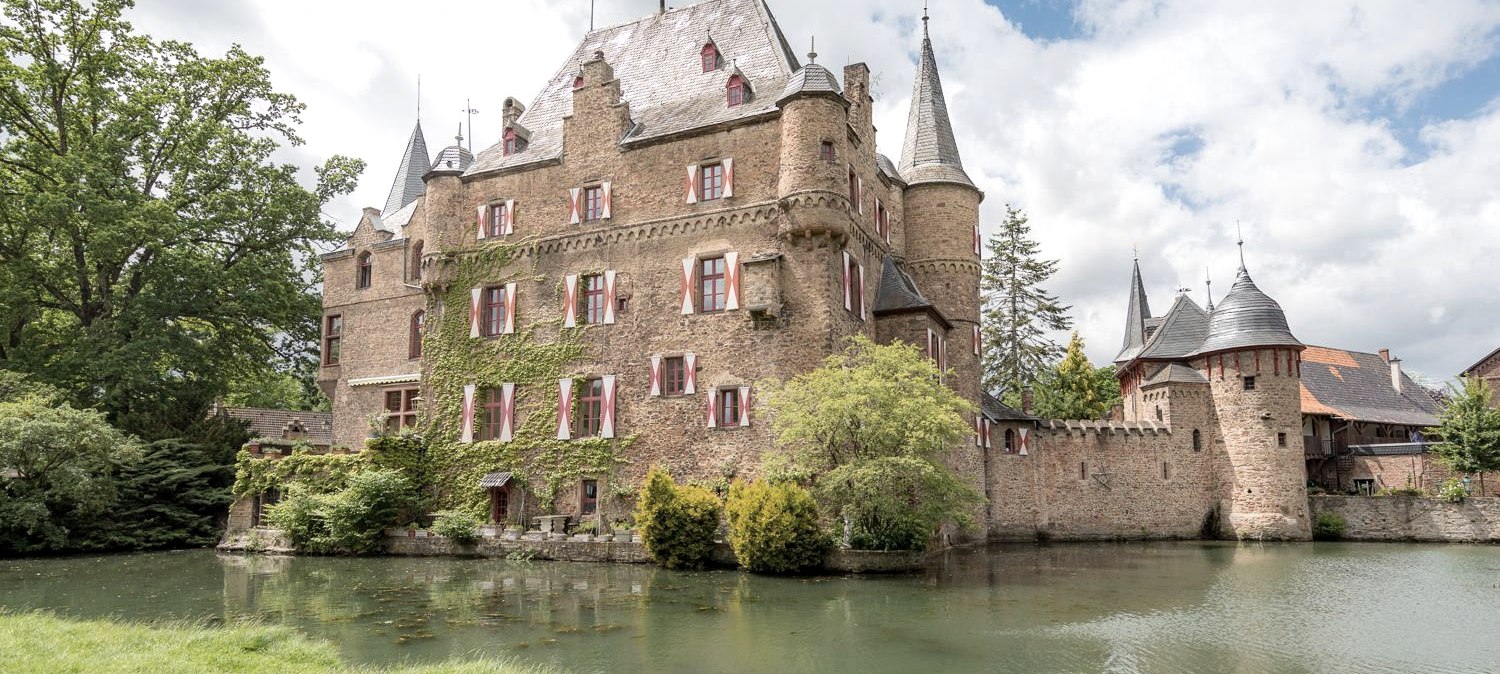
Satzvey Castle, © Manuel Thome Photography

Castle Satzvey

Mechernich

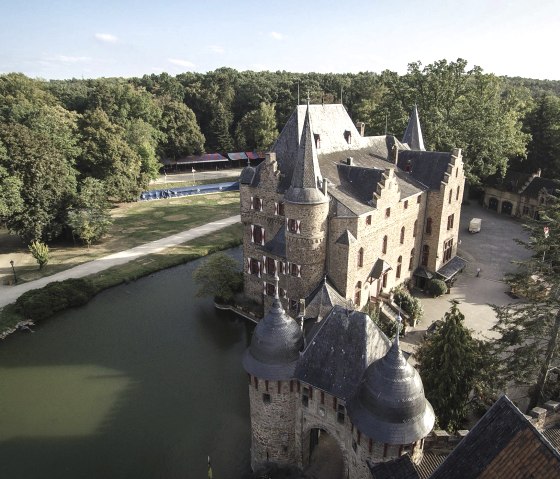
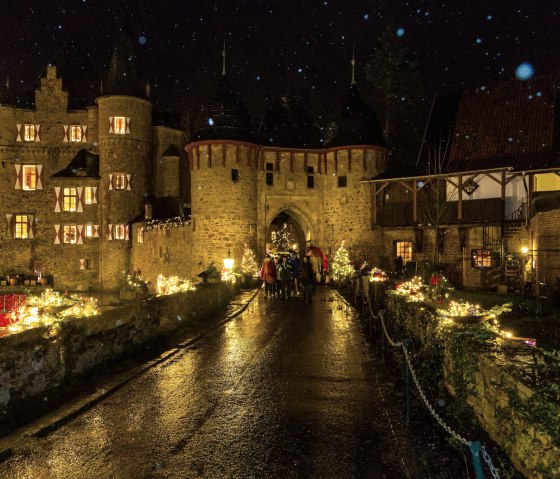
Satzvey Castle was built between 1396 and 1406 on an island in the middle of a large pond crossed by the Veybach. The son of Max Felix Reichsgraf Wolff Metternich, who had lived as lord of Satzvey since 1878, expanded the castle to its present appearance full of a sense of style.
mehr lesen

Share content:

At a glance

Opening hours

Castle tours with a guided visit through the halls of the castle take place on Saturdays, Sundays, and public holidays from 1:00 PM to 4:00 PM (with a minimum participation of 5 adults) on the hour. Outside this time, a castle tour is only possible with prior registration.

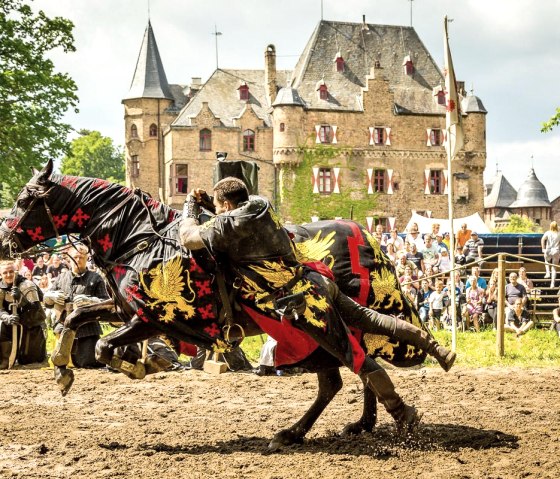
Please note the event information for the Easter Market, Witch Fest, Knight Games, and many more!

Outside of events, the courtyards of the castle with the restaurants are open year-round for visitors with free admission.

Place

Mechernich

Contact

Patricia Gräfin Beissel GmbH | Konzepte & Entertainment
An der Burg 3
53894 Mechernich-Satzvey
Phone: (0049) 2256 95830
Fax: (0049) 2256 958377

Homepagewrite e-mail

Bitte akzeptieren Sie den Einsatz aller Cookies, um den Inhalt dieser Seite sehen zu können.

Alle Cookies Freigeben

Plan your journey

per Google Maps

You might also be interested in

View of the historic Kronenburg, © Eifel Tourismus GmbH, Dominik Ketz

Kronenburg

The castle ruin and fortified settlement of Kronenburg Kronenburg Castle was one of the characteristic medieval hill-castles of the Eifel built on the spur of a ridge in the Upper Kyll Valley. The self-contained impression of the castle ruin, outer bailey and fortified settlement and their adaptation to the topography make the special charm of this site. Kronenburg was first mentioned in a charter of the Abbey Stablo Malmedy in 1277. Today the locality is a touristic attraction in the Upper Kyll Valley.

Cyclists at the source of the Erft

Erftquelle

The "Erft" rises in the small village of Holzmülheim, directly below the Himberg. It flows from here in the direction of Bad Münstereifel until it flows into the Rhine after about 100 km near Neuss. The spring was framed with natural stones by the village community.There is also a small statue of St. John Nepomuk, who is venerated as a bridge saint and is supposed to protect against water hazards. In the immediate vicinity is a playground, where there are also barbecue facilities and a lawn for sunbathing. At events at the spring, there is the possibility of being baptised in the Erft and receiving the title of "Erft cadet".