

Krewinkel anno 1787
Stolberg
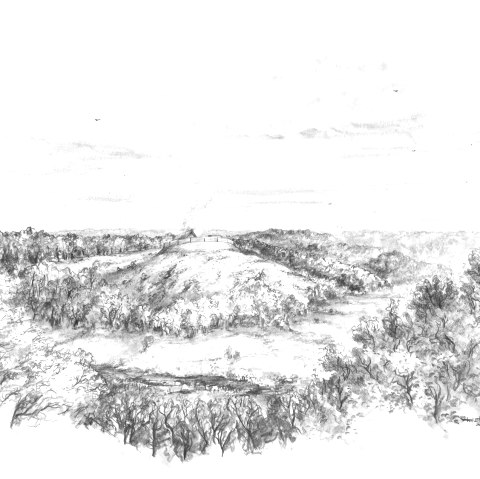
Figurative description of the Jülicher part
In the Ancien Régime, Krewinkel was a border village, with the northern side of the street under the jurisdiction of the subjects of the Abbot of Kornelimünster, while the opposite side belonged to the sphere of influence of the Counts of Jülich. As a result, the residents of the Jülicher side became parishioners and taxpayers of Schevenhütte after the establishment of the Schevenhütte parish in 1697. In 1787, the property ownership for tax purposes was documented by the cartographers Arnold Ophoven and Johannes Caspar Langendorf on behalf of the mayor of Schevenhütte. Among the property owners at that time were the heirs of Johann Fleck, Wilhelm Frings, the widow Mathias Bötgen, the heirs of Martin Mohr, Adam Hutten, Johann Herren, Peter Krings from Fleuth, Johann Scholl, and many other families.
The lifestyle of the residents was diverse. Many Krewinkeler and Mausbacher worked as plasterers and painters in Stolberg and Aachen, while others engaged in agriculture, kept livestock, or pursued mining as a side activity. A tax register documenting the grain contributions from December 26, 1367 lists 21 taxpayers for Krewinkel and Mausbach, indicating a small but existing peasant population. Considering that Krewinkel already had 24 houses in 1787 and a total of 28 houses in 1806, it is evident that agriculture must have played a significant role over the centuries. The operation of a windmill further confirms this and points to the supply of the population with their own grain.