
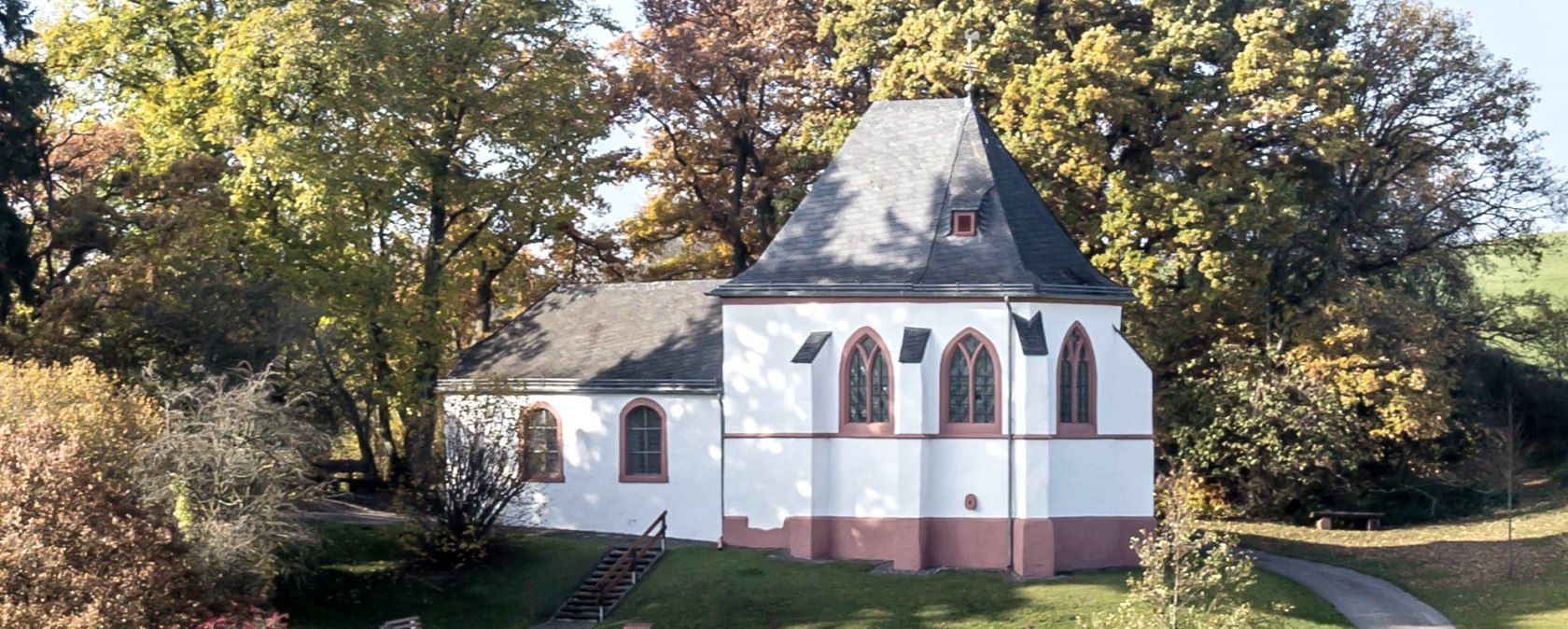
Ahekapelle, © Raimond Spekking / CC BY-SA 4.0 (via Wikimedia Com

Ahekapelle

Nettersheim

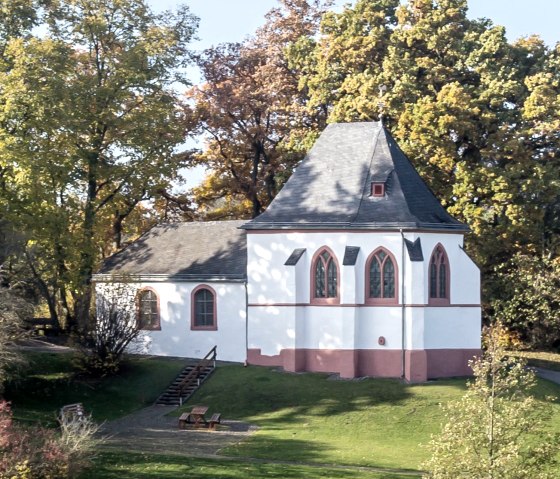
The Chapel of St. Servatius, popularly known as the Ahekapelle, is dedicated to St. Servatius, Bishop of Maastricht in the 4th century. It has a long tradition as a pilgrimage chapel and is located in the Genfbach valley near Nettersheim-Engelgau. The name of the chapel comes from the stream Ahe. Today this is called the Genfbach.

mehr lesen

Share content:

At a glance

Opening hours

  • From January 7th to October 15th
    Monday
    00:00 - 23:59

    Tuesday
    00:00 - 23:59

    Wednesday
    00:00 - 23:59

    Thursday
    00:00 - 23:59

    Friday
    00:00 - 23:59

    Saturday
    00:00 - 23:59

    Sunday
    00:00 - 23:59

 open year-round

Place

Nettersheim

Contact

Ahekapelle
Ahestrasse
53947 Nettersheim-Engelgau

Bitte akzeptieren Sie den Einsatz aller Cookies, um den Inhalt dieser Seite sehen zu können.

Alle Cookies Freigeben

Plan your journey

per Google Maps

You might also be interested in

Urfttalsperre im Morgenlicht, © Eifel Tourismus GmbH, Dominik Ketz

Urfttalsperre

The Urft Dam is the oldest valley dam in the Eifel and is located in the middle of the Eifel National Park. At the time, the dam was planned as the largest structure in Europe. Construction of the 266 m long wall made of quarry stones began in 1899 - in May 1905 the dam was filled with water for the first time. In addition to flood protection and energy generation, the aim of the hydraulic engineering measure was to supply the region with drinking water. With a length of 12 km, a width of up to 1 km and a maximum depth of 52 m, Lake Urft has a capacity of 45.5 million cubic metres. Translated with www.DeepL.com/Translator (free version)

Partnerbetrieb TourCert, © TourCert GmbH

LVR-Freilichtmuseum Kommern

History comes alive at the LVR open-air museum in Kommern: Chickens run around between the houses and peck at the ground, cattle graze peacefully in the pasture and fresh bread smells waft from the bakery. Visitors can wander through five different assemblies and their buildings. The journey through time in the Rhineland begins at the end of the 15th century and ends with the 20th century. Exhibitions and various festivals and markets, such as the Anno Dazumal fair, round off the museum experience.